Best Printer Buying Guide — Black Friday Deals 2026
Choosing a printer starts with the kind of work you expect it to handle: occasional color pages, ongoing home printing, or stacks of documents that need to move quickly. These three models take different approaches to ink, paper handling, and connectivity, so the right fit depends on your routine more than a headline feature. For Black Friday, compare the exact model and included configuration rather than assuming every offer covers the same setup. The HP DeskJet 2923 emphasizes everyday color printing and wireless options; the Epson EcoTank ET-2900 comes with substantial stated ink yield; and the Brother DCP-L2640DW is built around monochrome document work. Use the details below to identify the tradeoffs that matter before checking an offer.
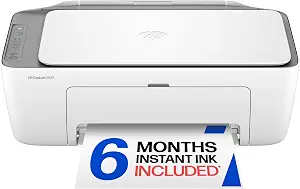
HP DeskJet 2923 Color Inkjet Printer (ASIN B0GMW9XT9X)
Best Budget is an editorial fit for shoppers seeking a straightforward color printer with several everyday functions, not a claim that this is the lowest-priced model or an active Black Friday deal. The HP DeskJet 2923 handles color printing, copying, and scanning, with a 60-sheet input tray. That combination suits a household that wants one device for varied basic tasks rather than a printer dedicated to a single kind of document. Consider how often you will use each function and whether the tray capacity suits the volume you typically leave ready to print.
For print pace, HP lists up to 7.5 ppm black and 5.5 ppm color. Duplex printing is manual, with driver support provided, so shoppers who regularly need two-sided pages should consider whether a manual process fits their routine. Maximum color print resolution is up to 4800 x 1200 optimized dpi under the stated conditions: printing from a computer on selected HP photo papers with 1200 input dpi. Those qualifications matter when comparing resolution claims; they describe a particular setup, not every print job.
Mobile and wireless printing are among the listed capabilities, and connectivity includes Apple AirPrint, USB, Wi-Fi, wireless direct printing, and Mopria. That range gives shoppers several listed connection routes to weigh against the devices and habits they already use, without assuming a particular setup will work for every person. The dimensions are 11.97″D x 16.73″W x 6.06″H, useful details to check against your planned location. During Black Friday, compare the listing for this exact model and consider the tray, manual duplexing, and color functions together. It makes the most sense when those everyday features matter more than choosing a printer centered on large stated ink yield or fast monochrome document workflows.
Key specs
Functions
Color print, copy, scan, and a 60-sheet input tray, plus mobile and wireless printing
Print speed
Up to 7.5 ppm black, 5.5 ppm color
Connectivity
Apple AirPrint; USB; Wireless (Wi-Fi); Wireless direct printing; Mopria
Duplex
Manual (driver support provided)
Maximum color print resolution
Up to 4800 x 1200 optimized dpi color (when printing from a computer on selected HP photo papers and 1200 input dpi)
Dimensions
11.97″D x 16.73″W x 6.06″H
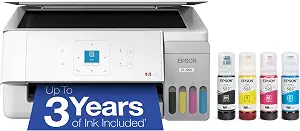
Epson EcoTank ET-2900 Wireless All-in-One Color Supertank Printer
Epson EcoTank ET-2900 Wireless All-in-One Color Supertank Printer (ASIN B0GSSGLV8D)
Best Overall is the editorial choice for shoppers who want a color all-in-one with a refillable tank approach and a notable amount of ink included. Epson says the EcoTank ET-2900 includes enough ink to last up to 3 years, and lists included yield of up to 3,600 pages black and 6,500 color. Treat those figures as the product’s stated yield, not a promise of how long ink will last in your particular household: actual use depends on what and how often you print. The figures are useful for considering whether the included supply aligns with your expected workload.
Its supersized ink tanks use uniquely keyed EcoFit bottles for refilling. This is a different supply approach from choosing a printer based mainly on an initial purchase offer, so consider whether tank refills suit your preferences and planned volume. Epson lists print speed at 11 black/6 color ISO ppm. It also has a 100-sheet paper tray, which helps you judge how much paper can be kept loaded between refills. A high-resolution flatbed scanner adds a document-handling function, while the 1.44″ color display provides an on-printer screen.
Wi-Fi is the listed connectivity option, so compare that with how you plan to send jobs rather than assuming other connections are included. The Best Overall label reflects the mix of included ink, tank design, scanning, display, and paper capacity among these featured choices; it does not establish measured superiority or make the model right for every buyer. For Black Friday, inspect the exact ET-2900 listing and offer configuration, then weigh its stated ink yield against your likely print volume. It may suit a home that prints regularly in both black and color; a very occasional printer may care more about a simpler entry point, while a document-focused buyer may prioritize monochrome workflow features.
Key specs
Ink supply
Epson EcoTank includes enough ink to last up to 3 years
Included ink yield
WORRY-FREE PRINTING — Epson EcoTank comes with enough ink to print up to 3,600 pages black/6,500 color
Ink refill system
Supersized ink tanks and uniquely keyed EcoFit bottles make refilling ink simple
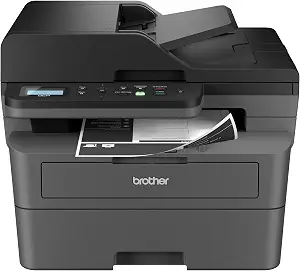
Best for Fast Document Workflows is a label grounded in the Brother DCP-L2640DW’s listed print speed of up to 36 ppm. This is a compact monochrome multifunction printer, making it a focused option for shoppers whose regular work is black-and-white documents rather than color pages. The speed figure can help you shortlist it for recurring document jobs, but it should not be read as a guarantee that every job will print at that pace. Consider the kinds of documents you handle and whether a monochrome device matches them before comparing offers.
Paper handling is a notable part of the decision. The printer has a 50-page auto document feeder, which is relevant if your routine involves feeding multi-page documents instead of placing pages one by one. It supports auto-duplex printing, a useful distinction for shoppers who want two-sided output without a manual page-turning step. Its maximum media size is 8.5 x 14 inch. These features make the model worth considering for document-oriented tasks, while the exact fit depends on your paper needs and the functions you use.
For connections, Brother lists built-in dual-band wireless (2.4GHz / 5GHz) and Ethernet. Compatible toner is TN830 or TN830XL, so check the toner designation when comparing the complete purchase and planning future supplies; do not assume another cartridge code is compatible. The model’s monochrome focus is an important tradeoff for shoppers who need color output. During Black Friday, compare the exact DCP-L2640DW offer with your needs for an automatic feeder, auto-duplexing, and wired or wireless connection. Its Best for label points to those documented workflow features, not a claim based on a test or a promise that it will suit every office.
Key specs
Print speed
print speeds up to 36 ppm(2)
Document feeder
A 50-page auto document feeder(4)
Wireless
built-in dual-band wireless (2.4GHz / 5GHz)
Wired connections
Ethernet
Duplex
Auto-Duplex
Maximum media size
8.5 x 14 inch
Compatible toner
TN830, TN830XL
Choose by the work waiting in your queue
Start by sorting your typical jobs into broad groups: color pages, recurring household documents, or batches of monochrome paperwork. That simple distinction separates these printers more clearly than a general search for a Black Friday bargain. The HP includes color print, copy, and scan functions, so it is a candidate when several everyday tasks need one device. The Epson’s stated black and color ink yields and refillable tanks are relevant if printing is a regular activity. The Brother is monochrome and lists a fast print speed and automatic document feeder, which align with document-centered routines.
Next, consider what a good result means for the pages you actually produce. A person printing occasional forms may value basic functions and wireless choices; someone regularly producing color pages may focus on the Epson’s included ink yield and refill system. A desk or small work area handling document batches may put the Brother’s feeder and auto-duplex feature higher on the list. These are different priorities, not a ranking that applies to every buyer. If your work mixes all three categories, decide which job causes the most friction now, then check that printer’s tradeoffs against the less frequent tasks.
This kind of shortlist also keeps Black Friday comparisons practical. Rather than chasing a large-looking offer, confirm the model name, then match its documented functions to your work. Think through output type, feeding, and the supply approach together. A printer that closely fits your recurring tasks can be a more sensible choice than one with an appealing headline but a workflow mismatch.
Estimate ink needs before weighing the offer
Ink is part of the buying decision, not an afterthought. The EcoTank ET-2900 uses supersized tanks and uniquely keyed EcoFit bottles, and its included ink is stated to yield up to 3,600 pages black and 6,500 color. Epson also describes that supply as enough to last up to 3 years. Those are useful reference points when estimating whether the included supply suits your plans, but your own usage determines how quickly it is consumed. Frequent color pages and occasional black documents will put different demands on a supply.
The HP listing provides a color inkjet option, while Brother specifies compatibility with TN830 and TN830XL toner for its monochrome model. The supplied details do not give comparative ongoing supply costs, so avoid assuming one has the lowest long-term expense. Instead, consider the type of supplies each model uses and whether the listed approach is one you are comfortable managing. For Brother, record the compatible toner codes when researching the exact model. For Epson, understand that its tank-and-bottle refill system is central to the product’s design.
On Black Friday, separate the printer’s offer from assumptions about future supply costs. Confirm the exact model and what the offer specifies, then use the listed ink or toner details as a prompt for your own cost research. This keeps the comparison grounded: included yield is not the same as a guaranteed lifespan, and a model’s purchase offer alone does not describe the full ownership decision.
Look closely at feeding and two-sided pages
Paper handling affects how much attention a printer asks of you. The HP has a 60-sheet input tray, while the Epson lists a 100-sheet paper tray. These capacities help you think about how often you may need to reload paper, but they do not tell you how much you print or which tray is better for your particular routine. If paper sits loaded between jobs, tray capacity may matter; if you print only now and then, other features may be more important.
For multi-page documents, the Brother’s 50-page auto document feeder is a distinct feature to consider. Its auto-duplex function also differs from the HP’s manual duplexing, which has driver support. If two-sided output is frequent, ask whether you prefer an automatic process or are willing to handle pages manually. Do not assume an automatic document feeder means automatic duplex scanning; the provided features do not establish that. Focus on the specific feeder and duplex functions named for each model.
Use your recurring tasks to set priorities: paper tray capacity for keeping sheets ready, an auto document feeder for feeding documents, and duplex behavior for producing two-sided pages. A Black Friday offer is only useful if its exact printer supports the paper workflow you expect. Checking these details before purchase can prevent choosing by a single headline specification that does not address the repeated steps in your day.
Check how each printer joins your setup
Connectivity can determine whether a printer fits naturally into your space and routine. HP lists Apple AirPrint, USB, Wi-Fi, wireless direct printing, and Mopria. Epson lists Wi-Fi. Brother offers built-in dual-band wireless (2.4GHz / 5GHz) and Ethernet. These are the documented options to compare; they should not be treated as proof of compatibility with every device, network, or workplace arrangement. If you rely on a particular connection, verify that the exact option you need is listed for the model you are considering.
Placement is another practical check. HP’s dimensions are 11.97″D x 16.73″W x 6.06″H, so compare that exact format with the space available rather than estimating from a product photo. For the other models, the provided details here do not specify dimensions; check their product listings for size information if fit is important. Also consider whether the printer will be near the device or network connection you plan to use, without assuming a connection method not stated in the product details.
As Black Friday listings compete for attention, use a short verification routine: match the model name, review its listed connection types, and confirm any physical-space requirements from the exact listing. That is more dependable than assuming two printers with similar names share the same options. A connection that suits your setup may matter more than an extra feature you rarely use.
Compare the complete Black Friday configuration
A printer listing can be easy to skim and still leave key questions unanswered. Begin with the exact model name and product configuration, then compare the features that shape your daily use: ink or toner approach, paper handling, output type, and connectivity. Do not treat a discount label as evidence of lower running costs or assume that an offer includes supplies beyond what the listing states. The information provided for these models gives useful specifications, but it does not establish current prices, active promotions, or the contents of any particular seller offer.
Keep your shortlist tied to the reason you chose each model. For HP, check that the color multifunction functions and manual duplexing suit you. For Epson, weigh the stated included yield and tank refill system against your printing pattern. For Brother, confirm that monochrome output, its specified toner codes, feeder, and auto-duplexing fit the work you do. If a listing’s configuration is unclear, resolve that before comparing it with another offer rather than filling gaps with assumptions.
Black Friday shopping can also reward patience: compare the same model across the exact listings you are considering and keep a note of the features that matter most. The goal is not to predict a deal or choose the most impressive-looking headline. It is to identify an offer that corresponds to the printer and setup you meant to buy, with tradeoffs you have already considered.
Make your Black Friday choice
The best choice depends on which inconvenience you most want to avoid. HP combines color printing, copying, scanning, and several listed connection options, with manual duplexing as a consideration. Epson pairs a tank refill system with substantial stated included ink yield, a flatbed scanner, and a 100-sheet tray. Brother is the monochrome document option, with an auto document feeder, auto-duplexing, Ethernet, and specified toner compatibility. During Black Friday, compare the exact model and offer details against those priorities rather than treating a promotion as the whole decision. Confirm the configuration, check the listed features that matter to your work, and choose the tradeoff you can live with every day.