RockJam RJ5061 61 Key Keyboard Piano Kit with Stand, Bench & Headphones (ASIN B083ZCWWWK)
Best Piano Keyboard Buying Guide — Black Friday Deals 2026
A piano keyboard shortlist is most useful when it begins with the kind of playing you want to do, not with a Black Friday banner. The three choices here serve different priorities: learning tools and varied built-in material, a complete-looking 61-key kit with a stand and bench, or weighted action across 88 keys. Those differences affect what to compare before you buy, but they do not establish that one instrument is right for every player. During Black Friday, check the exact model and package shown in the offer, then match its documented features to your routine. The goal is a keyboard you can use comfortably for the playing you have in mind.
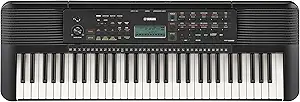
Yamaha 61-Key Portable Keyboard for Beginners with Learning Tools, Music Rest and Power Adapter PSRE283
Yamaha 61-Key Portable Keyboard for Beginners with Learning Tools, Music Rest and Power Adapter PSRE283 (ASIN B0D1CT2V57)
For a beginner who wants more than a row of keys, the Yamaha PSRE283 combines a 61-key layout with learning features and built-in musical material. Its keys are full-sized, and two ear-training games give a new player a specific activity beyond simply trying notes. The built-in songs cover hundreds of popular hits, children’s songs, classics, and more. That range may be useful when a learner wants to explore familiar material or vary practice with different kinds of songs. It does not promise a particular teaching plan, so consider whether these features suit the way you or the intended player prefers to learn.
The chord feature is another distinctive part of the package: it is described as letting players produce chords from simple pop triads to complex jazz chords with one finger. That can make chord exploration approachable for someone beginning to connect melody and harmony. The keyboard also has a 6.35mm headphone jack, which gives shoppers a concrete connection detail to check against headphones they plan to use. Included components are an owner’s manual, music rest, and AC adaptor. The music rest provides a place for printed material, while the listed adaptor addresses power in the package; no additional accessory should be assumed from that list.
Best Overall is an editorial fit for this model among the three listed choices, based on the combination of full-sized keys, ear-training games, built-in songs, chord support, and named included components. It is not a claim of measured superiority or a market-wide award. For Black Friday, compare the exact PSRE283 listing and its package details rather than treating the seasonal label as proof of a lower price or a changed bundle. This keyboard is especially worth considering if learning prompts and song variety matter more to you than the weighted action specified for the P71 or the stand-and-bench components listed for the RockJam. Those alternatives may better fit different priorities.
Key specs
Keys
61 Full-sized Keys
Learning mode
two ear-training games
Built-in songs
Built-in songs – hundreds of popular hits, children’s songs, classics, and more.
Chord feature
Easily play great-sounding chords – from simple pop triads to complex jazz chords – with just one finger.
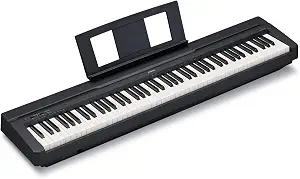
YAMAHA P71 88-Key Weighted Action Digital Piano (ASIN B01LY8OUQW)
If your priority is practicing on weighted keys, the Yamaha P71 offers 88 keys and a weighted action described as replicating the acoustic piano experience. Its touch-sensitive keys allow for expression and dynamic performance. Those are the central details to weigh if you want the keyboard’s key response to be part of your choice, rather than focusing first on a collection of learning activities or rhythms. A shopper deciding between a 61-key instrument and this model should consider how the stated layout and action align with their intended practice. The product facts support those distinctions, but do not establish that every player will prefer one feel over another.
The P71 includes 10 unique Voices, and Dual Mode lets you blend two Voices, with piano and strings given as an example. That gives a player a way to explore a combined sound using the documented feature, while the weighted action remains the most defining point for this shortlist. An included sustain pedal is also specified. If that accessory matters to your setup, confirm that the exact Black Friday offer is for this model and shows the package you intend to purchase. Avoid assuming that an offer’s image or headline represents a different bundle unless its listing details confirm it.
Best for Weighted-Key Practice is an editorial label grounded in the P71’s 88 keys, weighted action, and touch-sensitive response. It describes why this option may suit a shopper seeking those features; it does not claim a tested ranking. The tradeoff is a question of emphasis: choose this model when its key action and layout are the deciding factors, and look at the PSRE283 if ear-training games and built-in songs are more relevant to your learning plans. The RockJam, meanwhile, lists a stand and bench among its components. Those distinctions can guide a Black Friday comparison without assuming any feature is missing simply because it is not listed for another product.
Key specs
Keys
88
Key action
The weighted action replicates the acoustic piano experience
Key response
Touch-sensitive keys allow for true expression and dynamic performance.
Voices
Choose from 10 unique Voices
Dual Mode
Dual Mode lets you blend two Voices, like piano and strings
Included accessory
Included sustain pedal
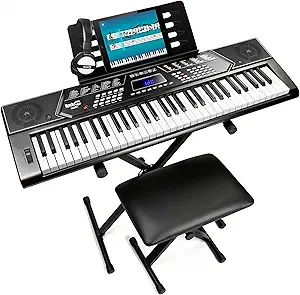
RockJam RJ5061 61 Key Keyboard Piano Kit with Stand, Bench & Headphones
RockJam RJ5061 61 Key Keyboard Piano Kit with Stand, Bench & Headphones (ASIN B083ZCWWWK)
The RockJam RJ5061 is a 61-key keyboard offered with a group of setup components identified in its product information: a keyboard stand, key-note stickers, piano bench, and sheet music stand. That package is a useful starting point for shoppers who want those named pieces together, rather than making a choice solely around key action or built-in learning features. The keyboard also lists a pitch bend wheel, which is a specific control to consider if that function matters to your playing. The provided facts do not describe how the wheel is used in different musical styles, so base your decision on whether having that control is relevant to you.
For variety, the RJ5061 lists 200 rhythms, 200 tones, and demo songs. These give a player documented options to explore alongside the keys, though the numbers alone do not indicate which sounds or rhythms will suit a particular person. It is battery powered, and its headphone jack is 3.5mm. Check that connection against the headphones you plan to use, and consider the stated power method when deciding where you expect to play. The listed weight is 3.3 kg, a detail that may help when you compare product information for your own setup; it does not by itself describe how convenient the keyboard will be in every situation.
Best Budget is the editorial label assigned within this shortlist, based on the named stand, bench, key-note stickers, and sheet music stand in the product details—not on an assumed price, sale, or value test. During Black Friday, compare the exact offer and verify which package it describes. This model may suit a shopper who places weight on those included components and on the listed collection of rhythms, tones, and demo songs. If weighted action is your key requirement, the P71 has that feature expressly specified; if ear-training games and built-in songs are the priority, consider the PSRE283. These are conditional choices, not claims that one keyboard is universally better.
Key specs
Keys
Number of Keys 61
Pitch bend
Pitch Bend Wheel
Tones and rhythms
200 rhythms, 200 tones and demo songs
Headphone jack
3.5mm Jack
Power
Battery Powered
Weight
3.3 kg
Included components
61 Key Keyboard Piano, Keyboard Stand, Keynote Stickers, Piano Bench, Sheet Music stand
Decide what the keys need to do for you
Start by separating key count from key feel. The PSRE283 and RJ5061 each list 61 keys, while the P71 lists 88. The two 61-key products are described as having different supporting features, but neither should be treated as a substitute for the P71’s documented weighted action. The P71 is the only one here whose facts specifically describe weighted, touch-sensitive keys. If that response is central to your practice, give that detail more weight than a seasonal promotion. If it is not your deciding factor, compare the other listed features instead.
Think through the music and practice you expect to pursue. Someone drawn to ear training and a broad selection of built-in songs may focus on the Yamaha PSRE283. A player looking for rhythms, tones, demo songs, and a pitch bend wheel may want to examine the RockJam’s details. A shopper choosing for weighted-key practice can focus on the P71’s action and 88-key layout. These are ways to organize your comparison, not promises about who will enjoy each instrument.
Black Friday can make a familiar model name appear beside an offer that emphasizes a package or a headline. Keep your decision anchored to the exact model and the features documented for it. Compare the listed key layout and action first, then move to the features that matter for your playing. That sequence helps prevent a tempting banner from taking precedence over the actual reason you began shopping.
Treat learning features as different kinds of help
Learning support is not one single feature. The PSRE283 lists two ear-training games, hundreds of built-in songs spanning popular hits, children’s songs, classics, and more, plus a one-finger chord feature described for chords ranging from pop triads to complex jazz chords. Those details give a beginner several documented points of comparison. Consider which kind of prompt would be useful: a game, song material to explore, or an easier way to play chords. The facts do not specify a full course or a particular progression, so do not assume the keyboard replaces lessons or another learning resource.
The other two products suggest different routes into exploration. The RockJam lists 200 rhythms, 200 tones, and demo songs, which may appeal when sound options and rhythmic material are a priority. The P71 offers 10 Voices and Dual Mode for blending two Voices, such as piano and strings. These specifications describe options, not a promise that one set will be more engaging or useful for every player. Decide which listed feature connects to your own practice rather than comparing counts in isolation.
As Black Friday offers circulate, use the feature wording to identify the model you meant to compare. A banner focused on sound variety does not answer whether you want ear-training games; an offer highlighting a keyboard does not establish its key action. Write down the two or three functions you actually expect to use, then compare each exact model against that short list.
Check the package against your setup
Included components can shape what you need to arrange around a keyboard. The PSRE283 lists an owner’s manual, music rest, and AC adaptor. The P71 specifies an included sustain pedal. The RockJam’s component list names a keyboard, stand, key-note stickers, piano bench, and sheet music stand. These are distinct package details, not interchangeable bundles. Decide which listed items matter to your space and playing plans, and do not add unlisted accessories to your expectations.
Connection and power information are also worth checking. The Yamaha PSRE283 lists a 6.35mm headphone jack; the RockJam lists a 3.5mm jack and battery power. If headphones are part of your routine, compare the stated jack with the connection on the headphones you intend to use. The provided P71 facts do not specify a headphone connection, so check the product listing if that detail affects your decision rather than inferring an answer. Likewise, do not assume a power arrangement beyond what the product information states.
For Black Friday, look closely at the precise product variant and package in the offer. Confirm that the named model and the listed components match your needs; do not rely on a generic image, headline, or a different configuration’s description. This simple check is especially useful when a shopper is choosing between a keyboard alone and a package that expressly names a stand or bench.
Match the sound options to the way you play
The sound-related specifications here take different forms. The PSRE283 emphasizes built-in songs and its chord feature. The RJ5061 lists tones, rhythms, demo songs, and a pitch bend wheel. The P71 specifies 10 Voices and a Dual Mode that can blend two, with piano and strings as the example. Rather than treating a larger number of options as an automatic advantage, ask what you want to do: play along with songs, explore rhythms, or combine Voices. The facts identify available features but do not describe a sound-quality comparison.
A practical choice begins with your likely session. If you want learning prompts, the PSRE283’s two ear-training games are a concrete point to consider. If you want to browse the RockJam’s listed rhythm and tone options, those specifications may be more relevant. If blended Voices matter, the P71 expressly describes that mode. Your preference can be more meaningful than a simple tally because the products list different categories of features.
For a Black Friday comparison, keep descriptions precise. Do not assume that demo songs, built-in songs, and learning games perform the same role, or that one product’s feature appears in another simply because its headline sounds similar. Check the model name and the exact wording, then choose according to the activity you expect to return to.
Make the offer earn its place on your shortlist
A Black Friday label is not enough to decide whether an offer fits. First identify the specific product and its documented configuration. Then compare the features you value: key count and action, learning or sound options, included components, connection details, and power information where provided. The supplied product facts do not establish a sale price, discount, stock status, or promotion, so do not treat any of those as guaranteed. Evaluate the actual offer shown to you on its own terms.
It can help to rank your needs before browsing. For example, choose whether weighted action, ear-training activities, or a named stand-and-bench package is a priority. Add secondary considerations, such as the specified headphone jack or built-in musical material. If a listing does not answer a question that matters to you, verify it in the exact product details rather than filling the gap with assumptions. A missing specification in this guide is not proof that a product lacks that feature.
Finally, compare the offer’s model name and package against your shortlist, not against a vague memory of an earlier listing. Black Friday shopping rewards careful matching: the keyboard that suits you is the one whose confirmed features support your plans and whose exact offer you understand. That approach keeps the decision useful even when promotions and presentation vary.
Make your Black Friday choice
These piano keyboards make different promises in their documented details: the PSRE283 brings full-sized keys, learning tools, songs, and chord support; the P71 centers its choice around 88 keys and weighted, touch-sensitive action; the RJ5061 pairs 61 keys with listed rhythms, tones, and setup components. Start with the feature you most want to use, then check the exact package and connection information. During Black Friday, compare the actual offer rather than assuming a banner signals a particular discount or bundle. A deliberate choice based on your playing goals is more useful than chasing a seasonal label.