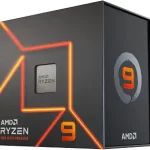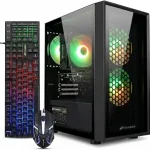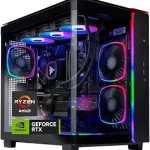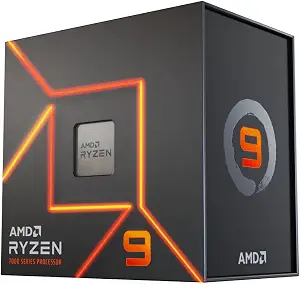
AMD Ryzen 9 7900X 12-Core, 24-Thread Unlocked Desktop Processor
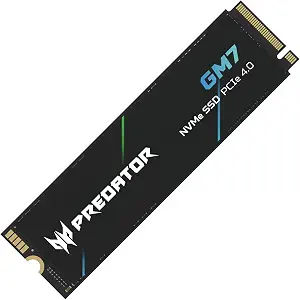
Acer Predator GM7 1TB SSD
Best Pc Parts Buying Guide — Black Friday Deals 2026
A PC-parts shortlist is most useful when it starts with the system you want to assemble, not the sale banner. These three options cover different decisions: an AMD processor with twelve cores and twenty-four threads, a one-terabyte M.2 SSD, and an 850-watt modular power supply. They are not a complete build, so treat each as one choice to check against the rest of your parts. During Black Friday, compare the exact product and variant shown on the offer page with the one you intended to buy. A promotion label alone does not tell you whether a component suits your motherboard, storage layout, or power requirements.
AMD Ryzen 9 7900X 12-Core, 24-Thread Unlocked Desktop Processor
Check Price on Amazon
The AMD Ryzen 9 7900X is the Best Overall pick in this small shortlist because its core-and-thread count and AM5 socket make it a clearly specified processor to assess as the center of a build. It has twelve cores and twenty-four threads, with 12 MB L2 plus 64 MB L3 cache. Those details help you compare it with the demands and plans for your own system; they are not a substitute for checking the other components you intend to use. On Black Friday, first confirm that the processor listing is the exact model you want, then compare its offer with your planned total build cost.
Socket AM5 is the key compatibility detail to take to your motherboard shortlist. Check that a board you are considering supports this socket, and verify its own compatibility information before checkout. The product facts also list an AMD Radeon Graphics controller. That is a useful item to note when reviewing the processor’s listed capabilities, but it does not establish how a particular game or application will perform. The stated 5 nm process technology is another specification for shoppers who want to compare processor listings side by side.
This choice makes sense for shoppers who want a twelve-core, twenty-four-thread processor on their shortlist and are prepared to plan the surrounding system carefully. Its role here is Best Overall among the featured products, not a claim that it is the right processor for every buyer or workload. During Black Friday, weigh the exact processor offer against the motherboard and other planned components, rather than treating the seasonal label as proof of value. If your build plan does not call for this model’s stated specifications, compare other options that fit your requirements instead.
Key specs
| Processor socket | Socket AM5 |
| Processor cores | 12 Core |
| Concurrent threads | 24 |
| Cache | 12 MB L2 plus 64 MB L3 cache |
| Process technology | 5 nm process technology |
| Graphics controller | AMD Radeon Graphics controller |
Acer Predator GM7 1TB SSD
The Acer Predator GM7 is a one-terabyte SSD in the M.2 2280 form factor, with a PCIe Gen 4 x4 NVMe 2.0 interface. It is the Best for PCIe Gen 4 storage pick in this guide because that interface is a specific, useful point of comparison for a storage shortlist. The product listing gives read speeds of up to 7400 MB/s and write speeds of 6500 MB/s. Keep those figures tied to the product’s stated specifications; they do not establish how the drive will perform in every system or workload. For Black Friday, verify that the offer is for this exact capacity and model.
The listed compatible-device categories are desktop, gaming console, and laptop. That broad list can help you decide whether to investigate the drive for a system you own or plan to build, but it is not confirmation that every desktop, console, or laptop supports it. Check the target device’s storage requirements, available M.2 fit, and interface support before buying. The product also lists HMB, or Host Memory Buffer, and SLC Cache. These are additional specifications to compare when reviewing SSD options; consider them alongside capacity, interface, and your intended use rather than as standalone reasons to purchase.
This SSD may suit a shopper who has already established that a one-terabyte M.2 2280 drive with this interface is appropriate for the target system. It is not a complete storage plan for every buyer, and the provided facts do not establish its fit in a particular machine. During Black Friday, match the product name and capacity on the offer page to your shortlist, then compare the exact offer with alternatives that meet the same system requirements. Avoid deciding on a seasonal badge alone: a drive only belongs on your list if the device’s documentation supports the relevant form factor and interface.
Key specs
| Capacity | Digital Storage Capacity 1 TB |
| Form factor | M.2 2280 |
| Interface | PCIe Gen 4 x4 NVMe 2.0 |
| Read speed | Read Speed Up to 7400 MB/s |
| Write speed | 6500 MB/s write-speeds |
| Cache | HMB (Host Memory Buffer) and is equipped with SLC Cache |
| Compatible devices | Desktop, Gaming Console, Laptop |
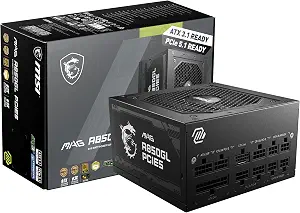
MSI MAG A850GL PCIE5
The MSI MAG A850GL PCIE5 is the Best Budget choice among these featured products, based on a combination of plainly stated power-supply specifications rather than a claim about its price. It provides 850 watts of output, has an 80+ Gold certification, and uses a fully modular design. Its stated standards are ATX 3.1 and PCIe 5.1 Ready, and the listing specifies a native Dual-Color 12V-2×6 cable. Those details give shoppers several concrete points to check against a planned build. For Black Friday, confirm the exact model and offer variant before comparing it with your power-supply shortlist.
Before choosing any PSU, work from the requirements of the complete system you intend to assemble. Check the components’ power needs and the case and connection requirements against the manufacturer information for each part. The 850-watt output is a stated specification, not a guarantee that the supply is suitable for every configuration. Likewise, the ATX form factor is worth checking against the case’s supported power-supply form factors. A fully modular design is a listed feature to consider when comparing products and planning cable selection, without assuming how it will fit into your particular build.
The Best Budget label here identifies an editorial role within this limited selection, not a finding that this is the lowest-priced option or a market-wide winner. Its combination of 850-watt output, 80+ Gold certification, modular design, and listed standards makes it straightforward to evaluate against a specific build plan. During Black Friday, compare the exact offer with other supplies that meet your system’s requirements; do not let a discount message replace those checks. If your planned parts call for a different form factor, output, or connection arrangement, prioritize that requirement over the label.
Key specs
| Certification | 80+ Gold |
| Design | Fully modular design |
| Output wattage | 850 watts |
| Standards | ATX 3.1 & PCIe 5.1 Ready |
| Cable | Native Dual-Color 12V-2×6 Cable |
| Form factor | ATX |
Plan the build before browsing Black Friday offers
Start by writing down the parts already selected and the parts still needed. A processor, SSD, or power supply cannot be judged in isolation: the processor must match the chosen platform, storage must fit the target device, and the supply must suit the complete system. For each item, note the exact model name and the requirements you need to verify. That small planning step makes Black Friday browsing more purposeful and reduces the chance of confusing a similar product with the one on your list.
Separate firm requirements from preferences. Socket, form factor, interface, and power output can be decisive compatibility checks, while other listed specifications may help distinguish options after the basics are satisfied. Keep the product page open alongside the documentation for the parts you are pairing. If a specification is unclear, pause rather than filling the gap with an assumption. A sale announcement cannot answer whether a particular motherboard supports a processor or whether a particular system accepts a drive.
It also helps to rank purchases by how much of the build depends on them. If you have not settled on a platform, decide that before choosing a processor. If the system’s storage format is still uncertain, check that before selecting an SSD. Build the shortlist around those dependencies, then use Black Friday to compare the exact offers for parts that already meet your needs.
Compare the exact Black Friday offer and model
The title of a deal can be less informative than the product details. Compare the full model name, capacity where relevant, and the specifications shown for the offered item with the one in your shortlist. This matters especially when browsing quickly: a similar-looking listing is not necessarily the same product or configuration. Do not assume a promotion applies to every variant, or that a page’s general description proves the particular offer matches your planned part.
Look at the exact offer you would select, and decide whether its product identity and required specifications are clear. If the listing does not give you enough information to confirm a key detail, set it aside until you can verify that detail. The supplied product facts do not establish current prices, discounts, availability, or how long an offer might last. Treat those as items to check on the live listing rather than as reasons to presume a deal is attractive.
A useful comparison is not simply one sale label against another. Compare products that meet the same needs, then consider the exact offer in that context. Black Friday can make it tempting to make a quick choice; a short model-and-specification check keeps the decision connected to your build rather than to the urgency of a banner.
Verify component fit across the system
Compatibility is a chain of checks, not one specification in isolation. For the Ryzen 9 7900X, take its Socket AM5 designation to the motherboard information and confirm support there. For the Acer Predator GM7, check the target device’s documentation for the M.2 2280 form factor and PCIe Gen 4 x4 NVMe 2.0 interface. The product’s listed device categories are helpful context, but do not establish compatibility with every individual computer or console.
For the MSI power supply, compare its ATX form factor and stated output with the case and complete parts list. Review connection requirements for the components you plan to use, including the cable details given in the product listing. The listed standards and cable are reasons to check the relevant component documentation, not a blanket confirmation that every configuration will connect or operate as intended.
Make these checks before placing a Black Friday order, and repeat them if you change another part of the build. A revised motherboard, case, storage plan, or component selection can change what needs to be verified. When in doubt, use manufacturer compatibility information for the exact products involved rather than relying on a broad category match.
Use specifications to compare what matters to you
Choose a few decision points for each category instead of trying to treat every specification as equally important. For a processor, the Ryzen 9 7900X’s twelve cores, twenty-four threads, cache figures, and socket offer concrete comparison points. For an SSD, capacity, form factor, interface, and the stated read and write speeds make a focused checklist. For a PSU, output, certification, modular design, form factor, and standards can organize the comparison.
A specification is most useful when it connects to a requirement in your own system. If a number or feature does not affect your decision, it need not dominate the shortlist. The SSD’s stated read speed is up to 7400 MB/s, while its listed write speed is 6500 MB/s; use those as product details when comparing relevant options, not as a promise about every task or device. Similarly, the PSU’s 850-watt output should be checked against the full build rather than treated as universally appropriate.
During Black Friday, keep qualifications intact when comparing listings. “Up to” matters, model names matter, and a listed compatible-device category does not settle fit in a specific machine. Write down what each product page actually says and what remains to confirm. That distinction helps prevent an attractive offer from turning an uncertain specification into an assumed one.
Set a Black Friday checkout checklist
Before checkout, compare the selected item with your saved shortlist: verify its exact model, the relevant specifications, and the system component it must work with. For the processor, confirm the motherboard’s socket support. For the SSD, confirm the target device’s storage fit and interface. For the PSU, review the case form factor, system power needs, and connection requirements. These checks are more useful than relying on a generic deal label.
Then review the live offer details yourself. The facts in this guide do not establish the current price, discount, stock status, seller terms, or delivery timing, so do not treat them as known. If a listing changes or the selected variant is different from your intended one, reassess the purchase rather than carrying over an earlier decision. Keep your build budget and any remaining parts in view before committing.
A good Black Friday purchase is one that still makes sense for the build after the promotional wording is removed. If compatibility remains uncertain, wait until you can verify it. If the product and offer match your plan, you can make the choice with a clearer understanding of what the listed specifications do—and do not—tell you.
Make your Black Friday choice
These parts offer three different ways to shape a PC shortlist: an AM5 processor with twelve cores and twenty-four threads, a one-terabyte PCIe Gen 4 M.2 SSD, and an 850-watt ATX power supply with a fully modular design. None should be chosen on its category label alone. Match each product’s exact specifications to the rest of your system, and verify the offer variant before buying. Black Friday can be a useful time to compare options, but the best decision is still the one that fits your build requirements and budget.