Best Miter Saw Buying Guide — Black Friday Deals 2026
A miter saw choice starts with the cuts and materials you expect to handle, then narrows through blade size, angle adjustment, and the room available for setup. This guide compares three corded models with different documented strengths: a 12-inch double-bevel saw, a compact-footprint 10-inch compound saw, and a sliding 10-inch option with a stated crosscut capacity. For Black Friday, treat the sale message as a prompt to check the exact model and listing—not as proof of a discount or a match for your needs. The useful comparison is between the saw’s stated specifications and the jobs you actually plan to do.
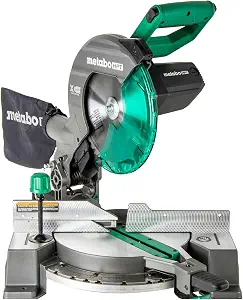
Metabo HPT 10-Inch Compound Miter Saw, 15-Amp, Single Bevel, C10FCG2
The Metabo HPT C10FCG2 is labeled Best Budget among these picks. The label is an editorial category, not a statement about its current price or a prediction about Black Friday savings. Its documented combination is a 10-inch compound miter saw with a single bevel, corded-electric power, and a 15-Amp rating in the product name. The listed voltage is 120 volts, and its no-load speed is up to 5,000 RPM. These details help identify the saw’s electrical and blade-speed specifications; they do not establish how it will perform on every material or task.
Its angle settings give shoppers concrete points to compare with a project plan. The miter range is 0-52° left and right, while the adjustable bevel range is 0-45° left. Since this is a single-bevel model, consider whether a left-only bevel adjustment fits the cuts you anticipate and whether you are comfortable planning around that arrangement. The stated ranges do not tell you every stop or adjustment detail, so check the exact listing if a particular preset is important.
The dimensions are 23.6″L x 18.3″W x 21.8″H, and the listed weight is 24.2 pounds. Those measurements can help you think through storage, carrying, and where the saw might sit; they do not guarantee that a particular bench or work area will suit it. Measure your intended space and leave room for the material you plan to position. For occasional trim or project cuts, use your own stock dimensions to decide whether the stated information is enough or whether you need verified capacity details before purchasing.
For Black Friday, compare the C10FCG2’s exact model name and variant rather than treating Best Budget as a price promise. Its documented strengths for this guide are the listed miter range, left bevel adjustment, and specific dimensions and weight. Those can make it a sensible candidate when those particulars align with your priorities. If your plans require a right bevel, unusually wide stock, or a specific cutting capacity, look for confirmation in the listing before deciding; the provided specifications do not settle those questions.
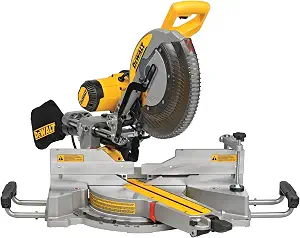
The DEWALT DWS780 is the Best Overall choice in this selection for shoppers who put a 12-inch blade and double-bevel design high on their list. That label is an editorial fit among these featured saws, not a claim of tested superiority or a market-wide award. Its corded-electric power source and listed 110-volt voltage are relevant if you are planning a fixed work area with a suitable power connection. The listed speed is 3800 rpm, and its blade has 80 teeth. Those details describe the configuration; they do not by themselves establish cut quality or suitability for a particular material.
A larger blade may be a deciding factor when comparing saw formats, but blade size alone does not tell you the maximum width or thickness this model can cut. The available information gives a 12-inch blade and a cutting angle of 90 degrees, but no cutting-capacity figure. If your project depends on a specific board size, verify the product listing for that exact requirement before choosing. Do not assume the blade dimension answers a capacity question.
The double-bevel designation can matter to shoppers whose plans include bevel cuts in either direction: consider whether that adjustment arrangement suits your workflow and how often you expect to change angles. The provided details do not specify the bevel range or stops, so compare those requirements against the listing rather than filling in the gaps from the model name. Likewise, the 80-tooth blade is a stated feature, but it is not a guarantee of a particular finish.
During Black Friday, compare the DWS780 listing with the exact model name and included configuration shown in the offer. Check that the product is the 12-inch double-bevel version you intend to buy, then weigh its stated features against capacity information and workspace needs that matter for your project. The Best Overall label here reflects its combination of documented blade size and double-bevel design within this guide. If those are not priorities, another saw with more directly relevant stated capacity or footprint information may be easier to evaluate.
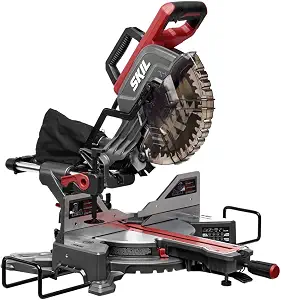
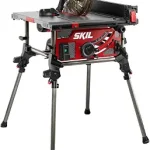
The SKIL MS6305-00 earns the Best for Wide Crosscuts label here because its stated capacity is specific and easy to compare with a board plan: it cross cuts lumber up to 2×12 at 90 degrees. This editorial label points to that provided feature; it does not claim that the saw is superior in every situation. The model is a 10-inch dual-bevel sliding compound miter saw, and its listed motor speed is 4800 rpm. If your work includes wider stock, use the stated capacity as a starting point, then confirm that your material and intended cut match the listed conditions.
The saw’s angle details provide another useful comparison. It cuts up to 50 degrees left and right, with 11 positive stops at commonly used angles. For bevel cuts, the listed positive-stop positions are 48° and 45° left, 0°, and 45° right. That information helps shoppers consider both the directions available and the stated stop positions. It does not tell you whether every angle needed for a project is a positive stop, so check the listing if your work depends on a particular setting.
Because this is a sliding model, it may be worth considering when the crosscut requirement is central to your purchase. Still, do not treat the word “sliding” as a substitute for checking the stated capacity against the actual stock and cut you have in mind. The listed blade is 10 inches, and the saw weighs 39.4 pounds. Use the weight when planning where it will be placed or stored, and check your workspace rather than assuming portability or fit from the product name.
In a Black Friday comparison, verify that the offer is for the MS6305-00 and review the exact variant details. The Best for Wide Crosscuts label follows the stated 2×12 capacity at 90 degrees, while the dual-bevel and miter-angle information helps with angle planning. If your priority is a different blade size, lighter listed weight, or a particular cut outside the stated capacity, compare those requirements directly. The available specifications support a focused decision, not a conclusion about unlisted features or performance.
Key specs
Power source
Corded Electric
Motor speed
4800 rpm
Dual bevel positions
Perform cuts in four positive stop positions at 48° & 45° left, 0°, and 45° right
Cutting capacity
Cross cuts lumber up to 2×12 at 90 degrees
Miter angles
Cuts up to 50 degrees left and right with 11 positive stops at most used angles
Blade length
10 inches
Weight
39.4 pounds
Translate your cut list into saw requirements
Before browsing Black Friday offers, write down the kinds of cuts your projects call for. Separate straight crosscuts from angled miter cuts and bevel cuts; a saw’s listed ranges and adjustment direction can then be compared with real tasks instead of vague expectations. For example, the Metabo HPT lists a 0-52° miter range left and right and a 0-45° bevel range left. The SKIL lists cuts up to 50 degrees left and right and gives specific dual-bevel stop positions. Those descriptions are not interchangeable, so focus on the adjustment you need rather than assuming all compound saws cover the same settings.
Also note the widest and thickest material you expect to cut, using the actual stock dimensions from your project. The SKIL has a stated crosscut capacity of lumber up to 2×12 at 90 degrees. The available facts for the other two saws do not state a corresponding capacity. That does not mean they cannot handle a particular piece; it means you should verify the requirement in the product listing before relying on it. A clear cut list can prevent a tempting offer from distracting you from a specification that matters.
Read angle adjustments as workflow choices
Angle capability is more than a maximum number on a product page. Think about whether your work calls for miter adjustments, bevel adjustments, or both, and whether you want bevel settings on one side or both. The Metabo HPT is identified as single bevel, with its stated adjustment range to the left. The DEWALT is identified as double bevel, but the supplied details do not give its range. The SKIL is dual bevel and lists positive-stop positions at 48° and 45° left, 0°, and 45° right. Use those distinctions to check a project plan, not to assume an unlisted setting.
Stops can be useful reference points when they match the angles you use, but their presence does not answer every question about adjustment. The SKIL lists 11 positive stops for miter angles at commonly used settings; its facts do not enumerate each of those angles. If a particular cut is essential, confirm it in the exact product information. Black Friday comparisons are easier when you first identify the required angle and then check the model’s stated range, direction, and stop details, rather than comparing isolated numbers without context.
Give stock width and blade size separate checks
Blade diameter and cutting capacity answer different shopping questions. The DEWALT has a 12-inch blade, while the Metabo HPT and SKIL are 10-inch models. Those figures identify blade size, but they do not independently establish the dimensions of material each saw can cut. For a wide board, the SKIL’s stated capacity—crosscuts lumber up to 2×12 at 90 degrees—is the most direct capacity information in this selection. If your project calls for another dimension or an angled cut, make sure the relevant capacity is confirmed rather than extrapolated from that figure.
When the listing does not provide the capacity you need, treat that as an open question to resolve before buying, not as proof for or against the saw. This is particularly important during Black Friday, when a headline feature can draw attention away from the detail that determines fit. Compare the exact model and the particular cut conditions. Keep the material’s width, thickness, and required angle together in your notes so you can check the offer against the complete job rather than the blade size alone.
Plan the work area as carefully as the purchase
A saw’s listed dimensions and weight can help with practical planning, but neither replaces measuring your setup. The Metabo HPT is listed at 23.6″L x 18.3″W x 21.8″H and 24.2 pounds. The SKIL is listed at 39.4 pounds. The available facts do not give dimensions for the other models, so check their listings if storage or placement is a deciding factor. Consider where the saw will sit and how the stock will be positioned, then compare those needs with the information for the exact model.
All three products are listed as corded electric. The Metabo HPT is listed at 120 volts, and the DEWALT at 110 volts; no voltage is provided here for the SKIL. Use the details that are stated and confirm any power requirements relevant to your intended location. Do not infer cord length, portability, or workspace suitability from a power-source label. A Black Friday offer only makes sense if the saw can be accommodated safely and conveniently where you plan to use it.
Compare the listing details before acting on an offer
Black Friday messaging can make it tempting to decide from a banner or a model family name. Instead, verify the exact model number: C10FCG2, DWS780, or MS6305-00. Then check that the product description matches the intended blade size and bevel arrangement. If the choice depends on capacity, a particular angle, or the package configuration, confirm that specific detail in the listing. The information in this guide does not establish a sale price, discount, included accessories, or current availability, so do not treat any of those as guaranteed.
A useful comparison note might record your required cut, the relevant stated specification, and any unanswered question for each candidate. That keeps the decision grounded in evidence while leaving room to verify details the supplied specifications do not cover. Compare the exact offer and variant rather than assuming that similar names or sale language indicate identical products. The right Black Friday decision is the one that matches your cut list and workspace after those checks—not simply the listing with the most prominent claim.
Make your Black Friday choice
Choose by matching the saw’s documented details to the work ahead: the DEWALT offers a 12-inch blade and double-bevel designation, the Metabo HPT lists a defined miter range and left bevel adjustment alongside its dimensions and weight, and the SKIL states a crosscut capacity up to 2×12 at 90 degrees. Each label in this guide reflects a particular priority, not a universal ranking. During Black Friday, confirm the exact model and any specification your project depends on before comparing offers. When a key capacity or adjustment detail is not stated, verify it rather than guessing.