Hasbro Gaming Simon Micro Series Electronic Game
Let’s Go Fishin’ Game by Pressman
LEGO Creator 3 in 1 White Rabbit Animal Toy Building Set
Best Children S Toy Buying Guide — Black Friday Deals 2026
Children’s toys can invite very different kinds of play: remembering a sequence, taking turns around a moving pond, or building and rebuilding an animal. This guide considers those differences through three specific choices, with age guidance and play format kept in view. Simon is a one-player electronic memory game; Let’s Go Fishin’ is designed for one to four players; and LEGO Creator’s animal set offers three build options. For Black Friday, start with the child and the setting, then compare the exact product and variant shown in the offer. A seasonal deal is useful only if the toy suits the intended player and the kind of activity they will enjoy.
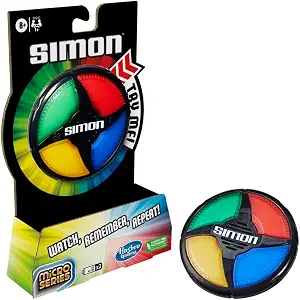
Hasbro Gaming Simon Micro Series Electronic Game
Best Budget is the editorial label for Hasbro Gaming Simon Micro Series Electronic Game. Its central activity is easy to describe: remember a color pattern, then repeat it by pressing the colored buttons in the correct order. The game is for one player and is listed for ages eight and up, making it a straightforward option to consider when the recipient wants an individual activity. The game unit is described as a smaller, compact size. That wording gives shoppers a sense of the format without requiring assumptions about storage, travel, or where it can be used.
The higher-level play detail adds another decision point. At that level, multiple lights come on together and the player has to press them at the same time. That changes the task from repeating a sequence one button at a time to responding to more than one illuminated button together. The included components are the game and instructions. When comparing this with the other choices, think about whether the child is drawn to remembering patterns and responding to electronic lights, rather than catching fish with other players or constructing an animal model.
For Black Friday, the Best Budget label identifies this guide’s editorial pick for shoppers considering a compact, one-player game; it does not promise a particular price or savings. Check the exact Simon Micro Series listing and its variant before comparing an offer. The age guidance, solo player count, smaller size, and included instructions are practical points to verify against the intended use. Since no battery information or sale terms are provided here, do not assume either from the product name. A child who enjoys repeating a sequence may find the core idea appealing, while a group activity or a hands-on building choice may better fit a different play preference.
Key specs
| Gameplay | remember the color pattern and repeat it by pressing the colored buttons in the correct order |
| Player count | 1-player game |
| Age range | Ages 8 and up |
| Game unit | smaller, compact size |
| Higher-level play | multiple lights come on together that players have to press at the same time |
| Included components | Game and instructions. |
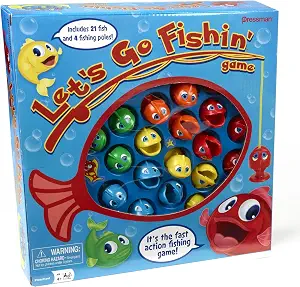
Let’s Go Fishin’ Game by Pressman
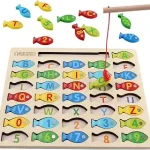
Best Overall is the editorial pick for shoppers seeking a defined activity for a small group. Let’s Go Fishin’ is for one to four players, ages four and up, so it can suit a child playing alone or a turn-taking session with others. Its rotating pond and fish that open and close their mouths give the activity a clear central focus: players use the fishing poles to try to catch the fish. The game includes 21 colorful fish and four plastic fishing poles, making the player count and supplied pieces useful details to check when considering who will join in.
The listing gives a playing time of 30 minutes and says gameplay helps develop hand-eye coordination. Those facts can help a gift-giver decide whether this format fits the occasion: it is a game with a stated session length, rather than a building project or a solo sequence-memory challenge. The deluxe plastic game base is another concrete part of the setup. Before choosing it, consider whether the child is interested in taking turns and following the changing action of the pond. The age guidance and one-to-four-player range also help clarify whether the toy matches the child and the likely group.
For Black Friday, this is the Best Overall choice among these three based on its broad one-to-four-player format, not on a comparative test or a claim about the wider toy market. Check that the offer is for the exact Let’s Go Fishin’ game and verify the listed contents and player details on the product page. The supplied facts do not establish a sale price or promotion, so compare the offer presented at the time rather than assuming a discount. If the intended recipient would rather build animals or repeat a color sequence alone, one of the other formats may be a closer match.
Key specs
| Players and age | For 1-4 players, ages 4 and up |
| Fish | 21 colorful fish |
| Fishing poles | 4 Plastic Fishing Poles |
| Gameplay | rotating pond and fish that open and close their mouths |
| Game base | Deluxe plastic game base |
| Playing time | 30 minutes |
| Skill | Gameplay helps develop hand-eye coordination |
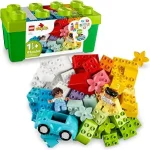
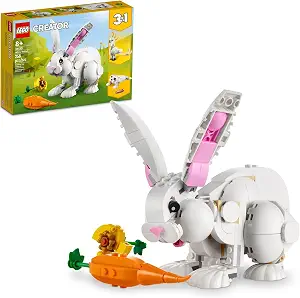
LEGO Creator 3 in 1 White Rabbit Animal Toy Building Set
Check Price on Amazon
Best for Rebuildable Animal Models is the editorial label for LEGO Creator 3 in 1 White Rabbit Animal Toy Building Set. It contains 258 pieces and is listed for ages eight years and up. The set can be built as a white rabbit, then rebuilt into a cute cockatoo parrot or a white seal. That three-way choice makes it relevant for a child who likes constructing an animal and changing the model, rather than keeping the play centered on a single game format. The included food elements are a carrot, a flower, seeds, and a fish.
The finished models have movement details that give each option its own character. The rabbit can move its head, legs, mouth, and ears, and stands over 5.5 in. (15 cm) high. The cockatoo moves its wings and tail and rotates its head 360 degrees. The seal can move its mouth and flippers. These are specific features to consider if the child enjoys poseable animal figures as well as building. They also make it worth checking which model is currently assembled if the set is being chosen for a particular animal interest; the product facts describe rebuilding between the three forms.
For Black Friday, this is a useful candidate when the recipient’s interest is in building and then changing the animal model. The Best for Rebuildable Animal Models label reflects that stated three-option design, not a measured advantage over other toys. Check the exact set and listing variant, and compare the offer with the product details rather than relying on a broad seasonal label. The age guidance and 258-piece count can help a gift-giver judge whether the project is appropriate for the intended child. If the child would prefer an activity with other players or a one-player electronic pattern game, the fish game or Simon may be more suitable.
Key specs
| Piece count | 258 Pieces |
| Age range | 8 years and up |
| Build options | rebuilt into a cute cockatoo parrot or a white seal |
| Rabbit movement | toy rabbit can move its head, legs, mouth and ears |
| Parrot movement | cockatoo parrot moves wings, tail and rotates its head 360 degrees |
| Seal movement | The LEGO seal figure can move its mouth and flippers! |
| Included food elements | a carrot, a flower, seeds and a fish |
| Rabbit height | The toy rabbit stands over 5.5 in. (15 cm) high. |
Begin with the moment the toy is meant to fill
A useful first question is not which toy sounds most impressive, but what the child will actually be doing. Let’s Go Fishin’ centers on a rotating pond, fish that open and close their mouths, and fishing poles. Its one-to-four-player format gives it a natural place in a shared activity, while its one-player allowance means a child can also play without a group. Simon instead asks one player to remember and repeat a color pattern. The LEGO Creator set starts with building and offers a different kind of change: the model can be rebuilt as a rabbit, cockatoo, or seal.
These distinctions matter when choosing a Black Friday gift because a low offer on the wrong type of play is still a poor fit. Think about whether the child tends to enjoy group turns, solo challenges, or assembling things. Also consider the occasion: a game whose listed playing time is 30 minutes may suit a planned activity, while Simon’s stated single-player format is designed around an individual turn at the controls. The LEGO set’s three build options can appeal when the gift is meant to provide a construction activity and more than one animal form.
Try describing the toy’s main action in one sentence before comparing offers. Catch fish, repeat lights, or build and rebuild an animal are clear summaries based on the product details. If that sentence matches what the recipient likes, move on to age guidance, player count, and the exact offer. If it does not, keep looking among the options rather than allowing the Black Friday label to make the decision for you.
Use age and company size to narrow the field
Age guidance is a practical filter, not a substitute for knowing the child. Let’s Go Fishin’ is listed for ages four and up, while Simon and the LEGO Creator animal set are both listed for ages eight and up. If choosing for a younger child, the fish game is the only one of these three with a lower stated age range. For an older child, all three can remain under consideration, with the kind of play and the rest of the product details doing more of the narrowing.
Player count gives a second useful distinction. Let’s Go Fishin’ is for one to four players, Simon is a one-player game, and the LEGO set is presented as a building toy rather than with a stated player count. Do not infer a formal player range for the building set from that difference. Instead, ask whether the gift is intended for independent play or for a game with family or friends. The fish game gives a defined range for group participation; Simon’s listed format is explicitly solo.
When comparing Black Friday listings, make sure the age and player details belong to the precise product shown. A similar title or an image that looks familiar is not enough to confirm that the listing matches the intended choice. Read the product name and variant, then check the stated age guidance and included components. This quick check can prevent choosing a toy because its category seems right when its specific format does not fit the recipient or the planned group.
Balance setup, interaction, and the play area
The products call for different kinds of interaction. Simon uses colored buttons and lights, with a higher-level task that asks the player to press multiple lights at the same time. Let’s Go Fishin’ uses a deluxe plastic game base, four plastic fishing poles, and 21 colorful fish around a rotating pond. The LEGO set involves 258 pieces and can be rebuilt into three animal forms. These details help describe what the child will handle, but the provided information does not specify setup time, storage needs, or how much room each activity requires.
That makes a quick look at the intended play area worthwhile. Consider where the child would sit or build, whether other players are likely to join the fish game, and whether an individual electronic game is a better fit for the planned moment. For the building set, consider whether the child is interested in creating a model and changing it into another animal. These are planning questions rather than claims about how much space any product takes.
The compact-size description for Simon is useful to note, but avoid turning it into an unsupported claim about portability or storage. Likewise, the game base and piece counts tell you what is included, not how the toy will fit a particular room. During Black Friday shopping, use the listing’s exact dimensions or other details if they are available there and relevant to your decision. The facts in this guide do not provide those additional measurements, so the safer comparison is to focus on the stated format and contents.
Choose the kind of replay that holds attention
Each toy offers a different reason to return to it. Simon’s repeating color patterns put memory and button pressing at the center, with a higher-level play detail involving several lights at once. The fish game has a rotating pond and fish that open and close their mouths, so the action is organized around trying to catch them. The LEGO Creator set offers three animal builds, each with stated movable parts. A child may prefer one of these actions over the others, and the product facts give a concrete way to discuss that preference.
It can help to connect the choice to something the child already asks to do: take turns in a game, repeat a challenge independently, or make and remake a model. Avoid assuming that a particular child will enjoy a toy simply because it has a specific feature. Instead, treat the features as prompts for a gift decision. The hand-eye coordination benefit listed for Let’s Go Fishin’ is an additional point to consider, while the movement details on the rabbit, parrot, and seal explain how the assembled figures can be posed or moved.
A Black Friday offer should not rush this decision. First choose the play style, then see whether the exact product is offered on terms that work for you. If the child’s interests are uncertain, compare the three formats rather than trying to rank them as universally better or worse. The editorial labels in this guide distinguish their intended strengths: a group-capable fishing game, a compact solo memory game, and a set with rebuildable animal models. They are starting points for matching, not proof that one toy suits every child.
Make the Black Friday offer check specific
Before buying, confirm that the listing is for the exact product named in this guide. Check the title and variant, then compare the product details that matter to your decision: age guidance and player count for the games, or piece count and the three build options for LEGO Creator. For Let’s Go Fishin’, the listing details include 21 fish, four fishing poles, a rotating pond, and a 30-minute playing time. For Simon, look for the one-player format, color-pattern gameplay, and game-and-instructions contents.
Next, read the actual offer shown rather than assuming that a seasonal event guarantees a promotion. No price, discount, stock status, or seller policy is established by the product information here. Compare the current terms for the exact listing with your own budget and gift plans. If the product page presents more than one option, make sure the offer applies to the option you mean to purchase. A Black Friday banner alone does not confirm that the variant or included item matches your choice.
Finally, pause if a detail you need is missing. The provided facts do not specify battery requirements, storage dimensions, or other terms, so check the listing for those only if they matter to you. This is especially helpful when buying a toy for a particular setting or trying to coordinate a gift with an existing plan. A careful check is more useful than treating a sale label as a reason to hurry: identify the product, verify the relevant details, and decide whether its play style suits the recipient.
Make your Black Friday choice
The strongest choice among these toys depends on the child’s preferred activity and who will play. Let’s Go Fishin’ offers a one-to-four-player fishing game with a stated 30-minute playing time; Simon is a compact one-player pattern game for ages eight and up; and the LEGO Creator set gives ages eight and up three animal models to build and rebuild. For Black Friday, match the exact listing to that intended use, verify the relevant product details, and compare the offer actually shown. The seasonal event can be a useful time to shop, but the right fit should lead the decision.