Best Good Laptop Buying Guide — Black Friday Deals 2026
A good laptop is the one whose operating system, screen, memory, storage, and connections suit the work you actually expect it to do. These three options cover different priorities: a student-oriented model with 16GB RAM, a Chromebook with Chrome OS, and a Lenovo with Windows 11 Pro and a broad set of listed ports. Start with your everyday tasks, then compare the configuration rather than choosing by a headline alone. During Black Friday, check the exact model and variant shown on the listing before deciding whether an offer fits your needs; no particular discount or promotion is assumed here.
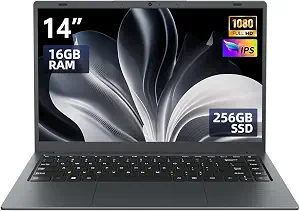
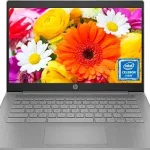
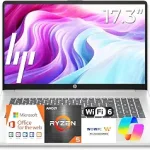
Best Overall is the editorial pick for shoppers who want a mix of practical student-oriented features in one configuration. The listed setup combines 16GB RAM with a 256GB SSD and a 14.0″ IPS FHD (1920×1080) screen. That gives you concrete details to weigh against your own priorities: memory capacity, the stated storage type and capacity, and a full HD display. The product name also identifies a webcam cover, while the specifications list a Pentium 6500Y processor (7W). If these details line up with your intended routine, this model is a reasonable place to begin a shortlist—not a claim that it suits every buyer or task.
For schoolwork, consider the files and applications you expect to keep on the laptop, then decide whether the listed 256GB SSD is a suitable amount of storage for that plan. The 16GB RAM specification may be an important comparison point if you are choosing among these three configurations, but it does not by itself establish how any particular application will perform. The 14.0″ IPS FHD screen provides a specific size and resolution to compare with your preferred viewing setup. There are two USB 3.2 Gen1 ports, so check whether that stated connection count matches the accessories you expect to use. The available facts do not identify other ports, so verify any additional connection needs on the exact listing.
The battery is specified as 5000mAh (7.4V); that capacity figure is not a stated runtime, so avoid treating it as a promise about hours away from an outlet. During Black Friday, compare the exact configuration and listing details with your needs rather than assuming the event guarantees a lower price or a particular bundle. Confirm that the product variant still shows the processor, memory, storage, display, battery wording, and ports you intend to buy. The Best Overall label is a guide to this article’s selection, not a measured superiority claim. Choose this option when its stated blend of memory, storage, screen, and student-oriented naming makes more sense for you than the Chromebook’s Chrome OS setup or the Lenovo’s listed connection variety.
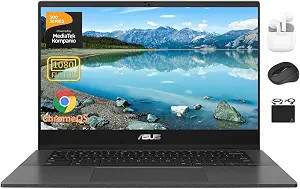
ASUS Chromebook Laptop Student Business 2024 (ASIN B0DFDWN8RT)
Best Budget is the editorial label for this ASUS Chromebook, a choice to examine if Chrome OS and a more limited listed memory and storage configuration fit your plans. Its specifications include a 14″ FHD anti-glare display at 1920 x 1080 pixels, an 8-Core MediaTek Kompanio 520 processor, 4GB RAM, and 128GB listed as 64GB eMMC+64GB Card. The operating system is Chrome OS. Those details make the central decision less about choosing a general-purpose label and more about confirming that this operating system and configuration suit the work, services, and file needs you have in mind. The Best Budget label does not mean a current low price or a guaranteed Black Friday discount.
This model also lists an integrated privacy shutter for its webcam, Wi-Fi 6 and Bluetooth 5.3 combo, and battery life of up to 15-hour. Keep the qualification “up to” in view when considering the battery figure; it is not a guarantee of a particular result in your own use. The anti-glare display wording may be relevant if you are comparing screen descriptions, while the resolution gives you an exact specification to check against the listing. For storage, read the complete 128GB description rather than comparing only the headline capacity with another laptop’s SSD figure. The supplied information identifies the storage components but does not give further detail about how your own files or applications will fit.
A Chromebook can be the right category to investigate when Chrome OS is what you want, but do not assume it is interchangeable with the Windows 11 Pro Lenovo or with a laptop whose operating system is not stated here. Check your required software and workflow against the exact product information before buying. During Black Friday, verify that the listing still identifies the ASUS Chromebook model and the configuration described, including its processor, RAM, storage, display, and connectivity. The Best Budget choice is meant to help shoppers who prioritize this particular Chromebook configuration; it does not establish that the model costs less than the alternatives at checkout. If 4GB RAM or the stated storage arrangement does not suit your requirements, compare the other listed options rather than relying on a promotional label.
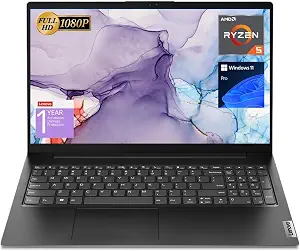
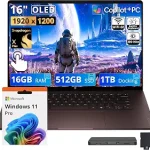
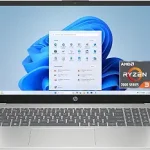
Best for Port Variety is the editorial label for the Lenovo V15, based on its listed selection of connections. The specifications name one USB 3.0 Type-A, one USB 2.0 Type-A, one USB Type-C, one HDMI, and one RJ45 port. If your routine involves connecting several kinds of equipment, compare that exact list with the plugs and connections you expect to need. The laptop also has a numeric keyboard, which may be useful to weigh if entering numbers is part of your regular work. These are specific features to consider, not a promise that every accessory or setup will work in a particular way.
The Lenovo’s other listed details include a 15.6″ diagonal FHD (1920 x 1080) display, an AMD Ryzen 5 5500U processor, 16GB RAM, and a 512GB PCIe NVMe M.2 solid state drive. Its operating system is Windows 11 Pro. Use those details to decide whether the display size, operating system, and stated memory and storage fit your plans. The processor description includes 6 Cores, 12 Threads, 8MB L3 Cache, a 2.1GHz clock speed, and up to 4.0GHz Turbo. Treat these as the supplied specifications, not as a performance comparison or a guarantee for any specific program.
This option may suit a shopper whose shortlist puts connection variety first, while someone who wants Chrome OS or a different screen size may prefer to compare the other entries. The product facts do not state a battery figure, so check the exact listing if battery runtime is a deciding factor; do not infer a specification from its absence here. For Black Friday, confirm the precise Lenovo V15 listing and configuration before assessing an offer. The Best for Port Variety label describes the reason it appears in this guide; it does not claim tested superiority or guarantee a particular price. Compare the ports and the rest of the configuration together, so a useful connection list does not distract from your operating system, display, memory, or storage requirements.
Key specs
Display
15.6″ diagonal, FHD (1920 x 1080)
Processor
AMD Ryzen 5 5500U Processor (6 Cores, 12 Threads, 8MB L3 Cache, Clock Speed:2.1GHz, up to 4.0GHz Turbo)
Memory
16GB RAM
Storage
512GB PCIe NVMe M.2 Solid State Drive
Operating system
Windows 11 Pro
Connectivity
1 x USB 3.0 Type-A, 1 x USB 2.0 Type-A, 1 x USB Type-C, 1 x HDMI, 1 x RJ45
Keyboard
Numeric Keyboard
Name the work your laptop must handle
Before comparing listings, write down the tasks that matter most: coursework, writing, web-based work, number entry, or keeping particular files on the device. Then separate requirements from preferences. An operating system may be essential to your workflow; a particular screen size or connection may simply be convenient. The Chromebook here specifies Chrome OS, while the Lenovo specifies Windows 11 Pro. The student-oriented laptop’s operating system is not stated in the provided details, so check its exact listing if that question matters to you. Do not assume all three offer the same software environment.
Next, note which supplied specifications answer your needs. The Chromebook lists 4GB RAM and a storage configuration described as 128GB (64GB eMMC+64GB Card). The other two list 16GB RAM; one lists a 256GB SSD and the Lenovo lists a 512GB PCIe NVMe M.2 solid state drive. These figures help you compare configurations, but they do not predict how your specific applications will behave. Decide how much storage your files require and which operating system you intend to use before letting an attractive Black Friday headline drive the choice. A short needs list makes it easier to identify a mismatch, even when a listing emphasizes a different feature.
Read screen descriptions for the way you work
All three laptops list a full HD resolution, but their screen descriptions are not identical. The student-oriented model has a 14.0″ IPS FHD (1920×1080) screen. The ASUS describes a 14″ FHD anti-glare display and lists 1920 x 1080 pixels. The Lenovo has a 15.6″ diagonal FHD (1920 x 1080) display. Compare the wording and size directly rather than treating every display as the same configuration. If you expect to move the laptop between places, think about whether a 14-inch-class screen or the Lenovo’s stated diagonal better fits your preferences; the provided facts do not give weight or dimensions.
Screen choice is personal, so consider what you usually view and how you prefer to arrange your workspace. Anti-glare is explicitly listed for the ASUS, while IPS is explicitly listed for the student-oriented laptop. Do not transfer either description to the other models. Black Friday product pages can present multiple variants or configurations, so make sure the display details belong to the exact option selected. Check the resolution, screen size, and any wording you particularly value on that listing before checkout. A screen description is useful only when it matches the variant you are considering, not merely the product family name.
Compare memory and storage in context
Memory and storage answer different questions. RAM is listed as 16GB on the student-oriented laptop and Lenovo, and 4GB on the ASUS Chromebook. Storage is listed as a 256GB SSD for the student model, 128GB (64GB eMMC+64GB Card) for the Chromebook, and a 512GB PCIe NVMe M.2 solid state drive for the Lenovo. Keep both categories in view when comparing: a storage capacity does not tell you the RAM amount, and a RAM figure does not describe how much room is available for files.
Think through the material you want to keep locally and the applications involved in your routine. The facts provided do not specify how much space your own files will take, nor do they establish which configuration will be fast enough for a particular task. Use the listed capacities as a basis for questions, not as an unsupported performance promise. On Black Friday, inspect the selected variant’s detailed configuration carefully; a product title alone may not communicate every component in the same way as the specification list. If either memory or storage is a firm requirement, confirm that exact item before comparing offers or making a decision.
Make ports and privacy details part of the checklist
List the devices you expect to connect, then match them to the ports actually specified. The Lenovo has USB 3.0 Type-A, USB 2.0 Type-A, USB Type-C, HDMI, and RJ45 connections listed. The student-oriented laptop specifies two USB 3.2 Gen1 ports. The ASUS facts highlight Wi-Fi 6 and Bluetooth 5.3 combo rather than a port list. These descriptions are not a complete inventory of every possible connection on each model, so verify any essential connection on the exact listing instead of assuming it is absent or present.
The privacy details also differ. The ASUS lists an integrated webcam privacy shutter, and the student laptop’s product name includes a webcam cover. Those are the supplied descriptions; do not assume identical mechanisms or add a privacy feature to the Lenovo. The Lenovo also lists a numeric keyboard, a detail to weigh if number entry is part of your routine. During Black Friday, pause over the full feature list rather than focusing only on a displayed offer. A port, privacy, or keyboard detail can matter more to your daily use than a broad category label, but the right priority depends on your own setup.
Use Black Friday listing checks, not assumptions
A seasonal label does not establish that a product is discounted, available, or offered in a particular configuration. Compare the exact item shown at checkout with the specifications that matter to you. Confirm the operating system, processor, memory, storage, display, and any essential ports or privacy details. If the page offers variants, make sure the selected one is the configuration you intended; do not rely on a nearby image or headline to settle that question. This guide does not claim an active Black Friday promotion or a specific saving.
It can help to rank your requirements before opening product pages. For example, decide whether Windows 11 Pro or Chrome OS is required, whether you need the Lenovo’s listed port variety, and what screen and storage details are acceptable. Then compare the candidate listings against that short list. Recheck the product name and full specification text before purchasing, especially if the offer presentation draws attention away from configuration details. Black Friday is a useful moment to compare options, but the decision should still rest on whether the exact laptop fits your work and preferences—not on an assumed discount or a label such as Best Overall or Best Budget.
Make your Black Friday choice
Choose by fit first: select the operating system and everyday requirements that matter, then compare the listed screen, memory, storage, and connections. The ASUS Chromebook is the option to consider for its specified Chrome OS setup; the Lenovo stands out in this guide for its listed port variety; and the student-oriented laptop combines 16GB RAM, a 256GB SSD, and a 14.0″ IPS FHD screen. During Black Friday, verify the exact configuration and offer rather than assuming a promotion or variant. The best choice is the one whose confirmed details match your needs.